
6. Trading: Trading Groups
Trading Groups define leverage and trading parameter overrides for tradingclients accounts.registered within the system.
Trading Groups are the single source of truth for leverage.
Symbols and Trading Pairs do not define or influence leverage in any margin, execution, or risk calculation.
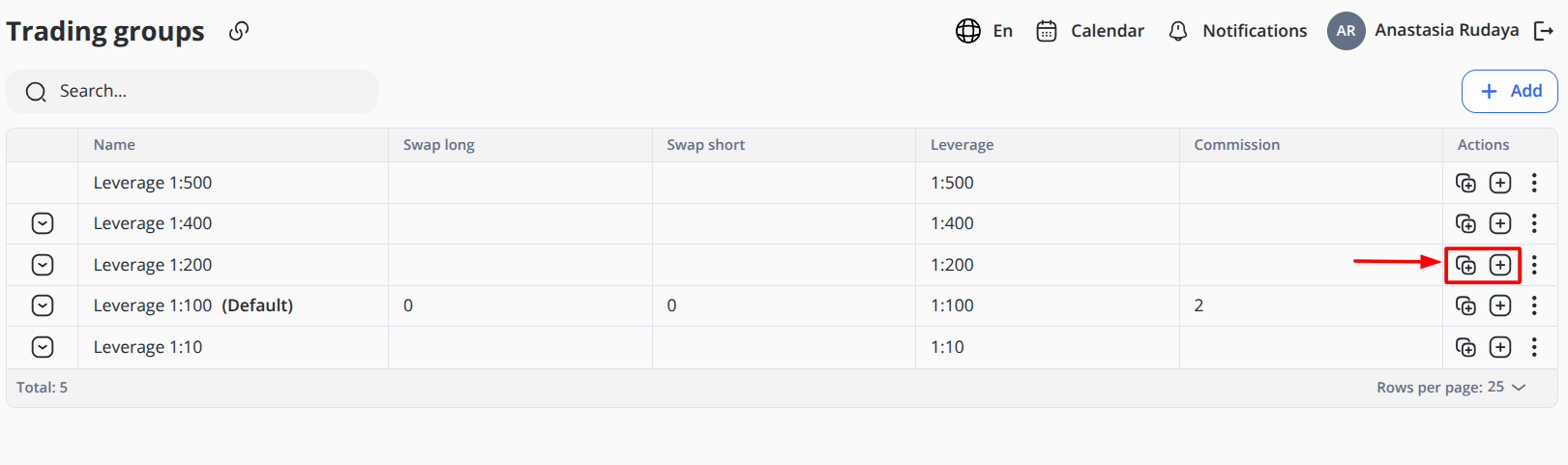
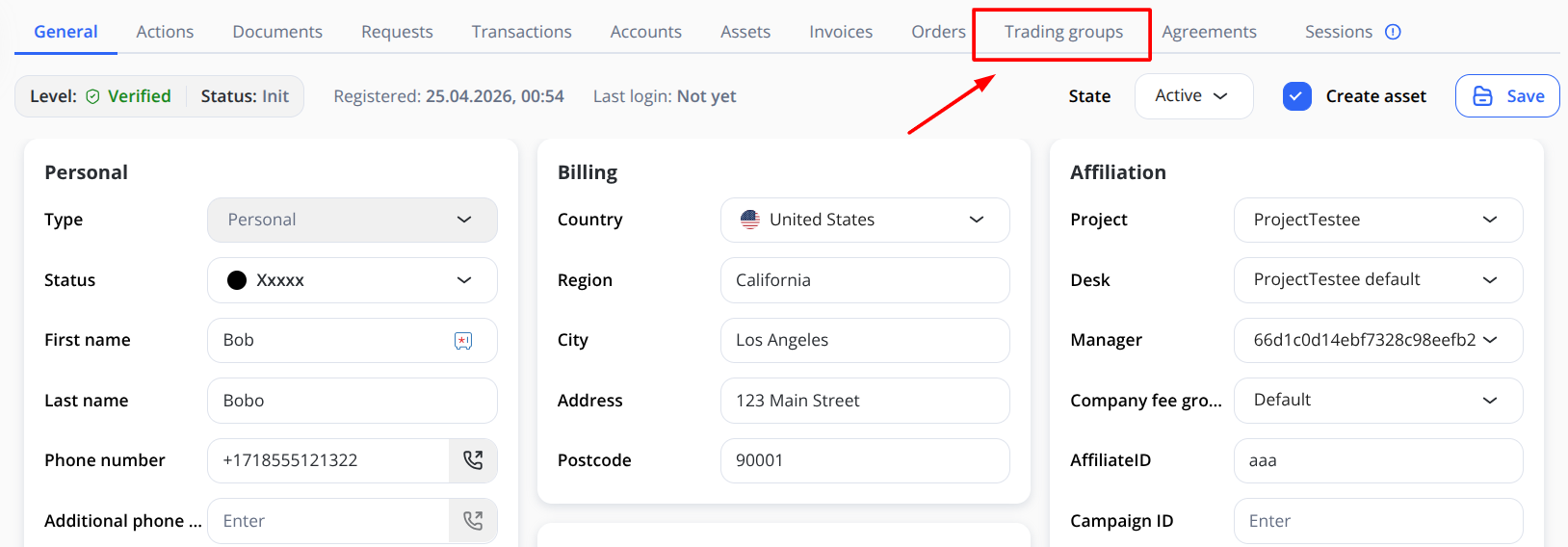
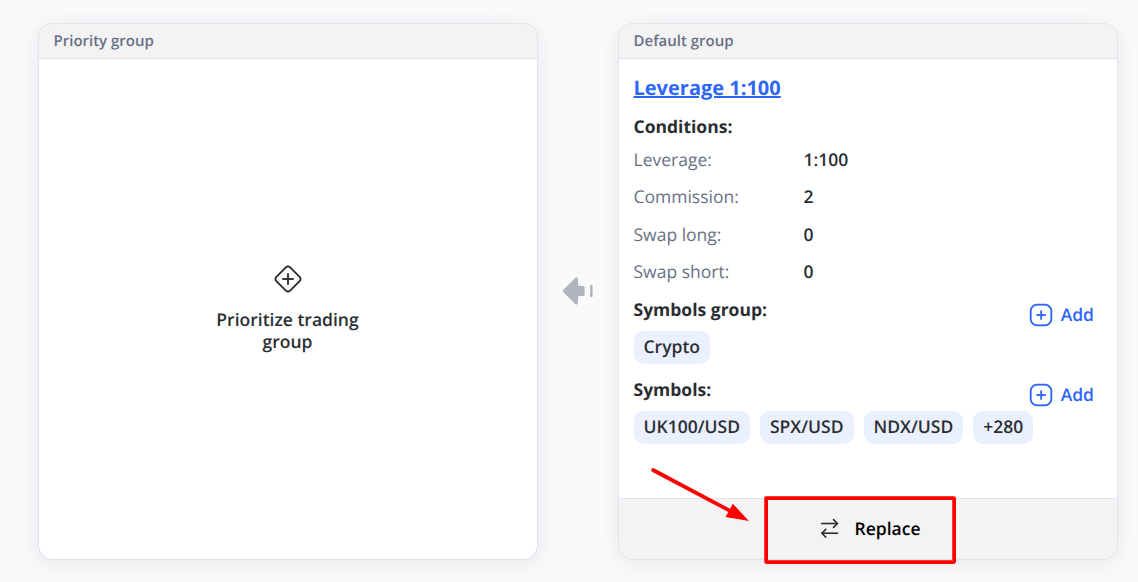
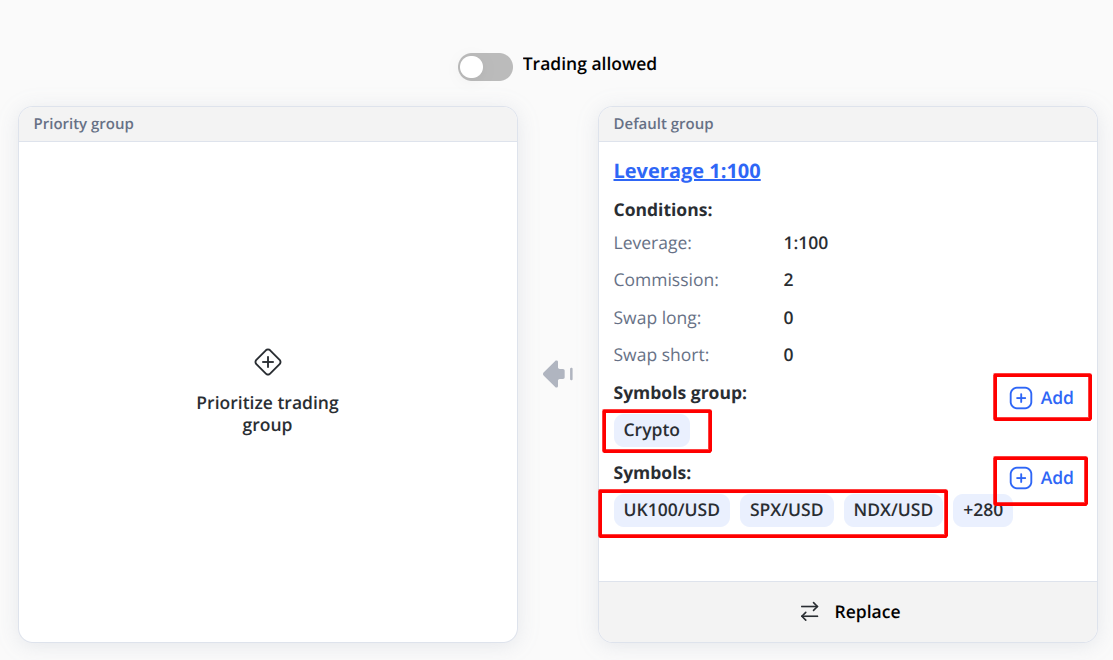
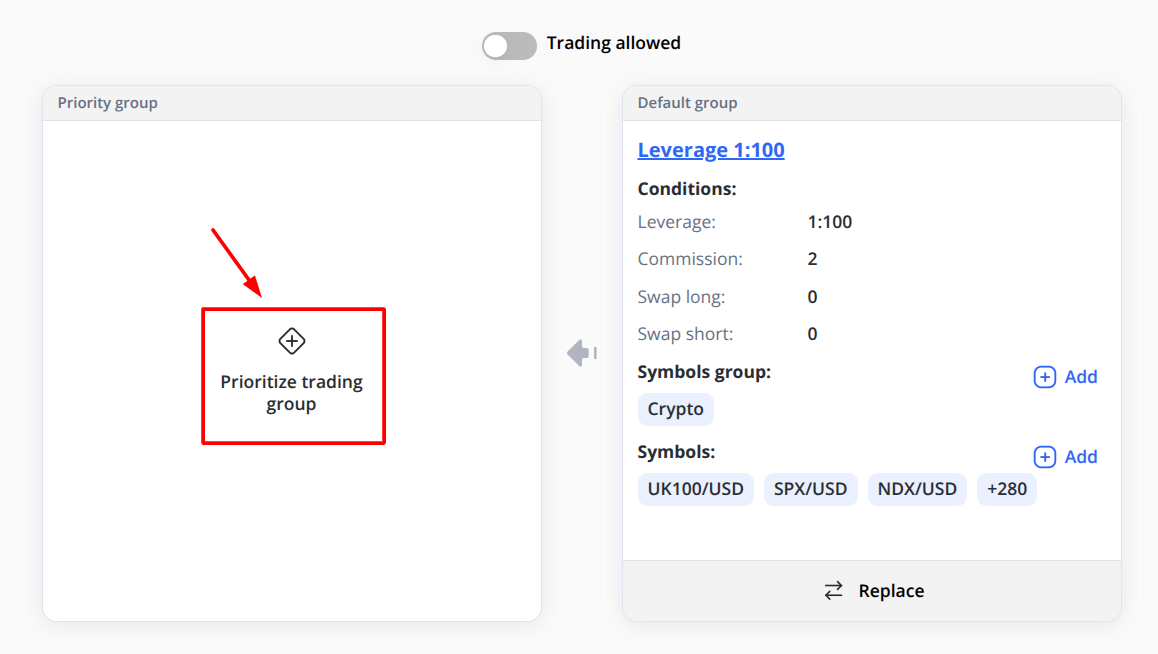
Total — Shows the number of trading groups displayed in the table. The system includes 5 predefined, locked Trading Leverage 1:10 Leverage 1:100 Leverage 1:200 Leverage 1:400 Leverage 1:500 These groups: Can define category-level overrides Are available for assignment to any On account creation: The system automatically assigns a trading group, which is marked as default. Click + Add General Section Example: Click Save To add specific values for Symbols and Symbol groups for the trading group, select the group from the Trading groups table and choose one of the actions you need: add Symbol or Symbol group. You may define overrides for the following Symbol groups: Forex Crypto Commodities Stocks Indices Example: *Example values are provided for demonstration purposes only To define configurations for specific Symbols (trading pairs) like BTC/USDT, ETH/BTC, or NEO/USDT, set configurations for each field: Example: *Example values are provided for demonstration purposes only. If no override exists, the group applies the default configurations. What Trading Groups Can Override Trading Groups may override: Commission Swap long Swap short Category-level leverage They do NOT override: Price feeds Tick size Contract size Trading hours Weekend rules Price deltas The following is no longer supported: Margin ratio defined on Symbols Leverage defined in Trading → Configurations Multiple group stacking for leverage resolution Leverage resolution is strictly: Account → Trading Group → Category Override → Effective Leverage When a new client is created inside our system, it automatically assigns the trading group marked as default. This group serves as the initial trading configuration for all newly registered accounts and defines leverage, swaps, and commission settings. Values for specific Symbols or Symbol Groups are not defined by default. The assigned Trading Group can be changed manually later if the client requires different trading conditions. To change the Default group: 1. Choose the client in the Clients module that requires changes. 2. Click Edit on the right side of the table. 3. Select Trading Groups in the table header. 4. Click Replace and select the required option from the drop-down list. 5. Click Save. You can also add values for specific Symbols or Symbol Groups within this Default group. For example, if you need to add custom values for crypto trades, open the window with the current values for the Default group and click Add to configure settings. Then: In the window that opens, select the required category from the drop-down menu. Assign values for Swap Long, Swap Short, Leverage, and Commission. Save the changes. In this way, you can define all required specific settings. When the client initiates a buy or sell trade, the system determines which value configuration to use as follows: First, it checks whether specific values are predefined at the Symbol level. If no Symbol-level values are defined, the system checks the Symbol Group level. If no specific values are configured at either the Symbol or Symbol Group level, the system applies the default settings from the assigned Trading Group. This creates the following hierarchy for applying value configurations: Symbol → Symbol Group → Trading Group If your client requires specific configurations for Symbols or Symbol Groups, you can change their default Trading Group to the Priority Group. Follow these steps: Choose the client in the Clients module that requires changes. Click Edit on the right side of the table. Select Trading Groups in the table header. Click + Prioritize Trading Group and select the required option from the drop-down list. Click Save. In the Priority Group Settings window, choose a specific Symbol Group or Symbol and set the required values. In this case, the hierarchy for applying configurations will be as follows: Symbols in the Priority Group Symbol Groups in the Priority Group Symbols in the Default Group Symbol Groups in the Default Group Default configurations of the Trading Group The system must always have one active Trading Group assigned to Multiple group ordering logic is no longer used for leverage. If the account has open positions, a modal appears: Recalculate margin for current open positions? If "Yes" Selected All open positions are recalculated using new effective leverage. Margin requirement updates immediately. Liquidation levels adjust accordingly. If "No" Selected Existing positions keep original leverage and margin. New orders use the new Trading Group leverage. Stored leverage on positions remains unchanged. At order execution: Effective leverage is calculated. That leverage is stored on the Position. It becomes immutable. Stored leverage is used for: Margin maintenance Liquidation checks Risk monitoring PnL exposure logic If Trading Group changes later and "No recalculation" was selected: Core Principle Effective Leverage Resolution System reads the account’s Trading Group. System checks for an instrument category override. If override exists → use override leverage. If no override exists → use group default leverage. Effective Leverage = The effective leverage is: Applied during margin validation Stored on the Position at execution Used later for liquidation and risk logic Margin is calculated using stored leverage on the position: For example: Contract Size = 100,000 Volume = 0.1 lot Price = 1.1000 Stored Leverage = 100 Calculation: The system does not read leverage from: Symbol Trading pair configuration Historical group values Only stored leverage is authoritative. Edit Changes affect: New orders immediately Existing positions only if recalculation was selected Delete Removes it from availability Does not delete historical stored leverage on positions Locked default groups cannot be deleted. Interaction With Trading Configuration Symbol setup Contract size Trading hours Swap defaults (if not overridden) Commission defaults (if not overridden) Leverage is never read from Trading pairs. Best Practices Use predefined leverage groups whenever possible. Avoid excessive category overrides unless required by risk policy. Review open positions before changing leverage for large accounts. Use clear and descriptive Names. Label is generated automatically. Document internal criteria for assigning leverage tiers. Trading Group Default Leverage Category Override Effective Leverage Stored LeverageFinding the Page
Page Layout & Controls
Top Section
Total — Number of trading groups in the table.
+ Add — Opens the Add Trading Group form.TableSearch ColumnsField — Allows users to search for trading groups by entering relevant keywords or identifiers.
Column
Description
Label
Short identifier (e.g., 1:100, VIP, Watchlist)
Name
Descriptive name
Default Leverage
Base leverage defined for the group
Active
Indicates whether the group is active
Actions
Edit / Delete
Default Locked Leverage Groups
Groups:Groups:
CannotCan be modified or deleted
Cannot have their base leverage modifiedtrading accountclientLeverageCreating 1:100a Trading GroupAn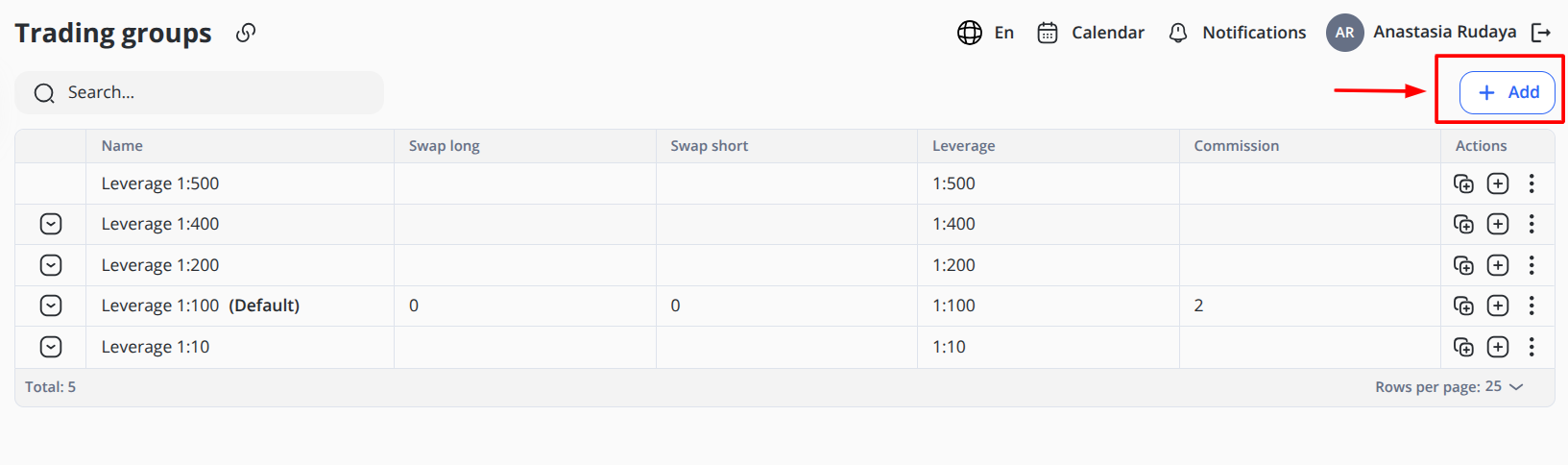
account
1:10
1:100
1:400
Group Configuration Overrides
Assigning Trading Group to an Account
Hierarchy of Values
Changing the Default group to the Priority group
trade.each client before trading is allowed.Specifics of Changing Trading Group
Yes / No
Position Leverage Storage
Existing positions continue using stored leverage.Leverage Architecture
Leverage is resolved exclusively through Trading Groups.
Symbols and Trading Pairs never define leverage.
When an order is placed:
Category Override (if exists)
else Group Default Leverage
Creating
a Trading GroupClick + Add.
General Section
Label (auto-generated)The system automatically generates a technical Label based on the Name.Label is used internally for API integrations and system references.
On create:
Label is not shown in the form.
It is generated automatically from Name.
Uniqueness is guaranteed by the backend.
On edit:
Label is displayed as read-only.
Label cannot be modified.
Name (required)Full descriptive name.
Active (toggle)If disabled, group remains stored but cannot be used for new assignments.
Default Leverage (required)Defines the base leverage for the group.
Example:100200500
Represents 1:100, 1:200, 1:500 etc.
Category-Level OverridesThis section allows defining leverage overrides per instrument category.
You may define overrides for:
Forex
Crypto
Commodities
Stocks
Indices
Any configured instrument family
Example:
Category
Leverage
Forex
200
Crypto
50
Indices
100
If no override exists, the group default leverage applies.
What Trading Groups Can Override
Trading Groups may override:
Commission
Swap long
Swap short
Category-level leverage
They do NOT override:
Price feeds
Tick size
Contract size
Trading hours
Weekend rules
Price deltas
What Is No Longer Allowed
The following is no longer supported:
Margin ratio defined on Symbols
Leverage defined in Trading → Configurations
Symbol-level leverage overrides
Multiple group stacking for leverage resolution
Leverage resolution is strictly: Account → Trading Group → Category Override → Effective Leverage
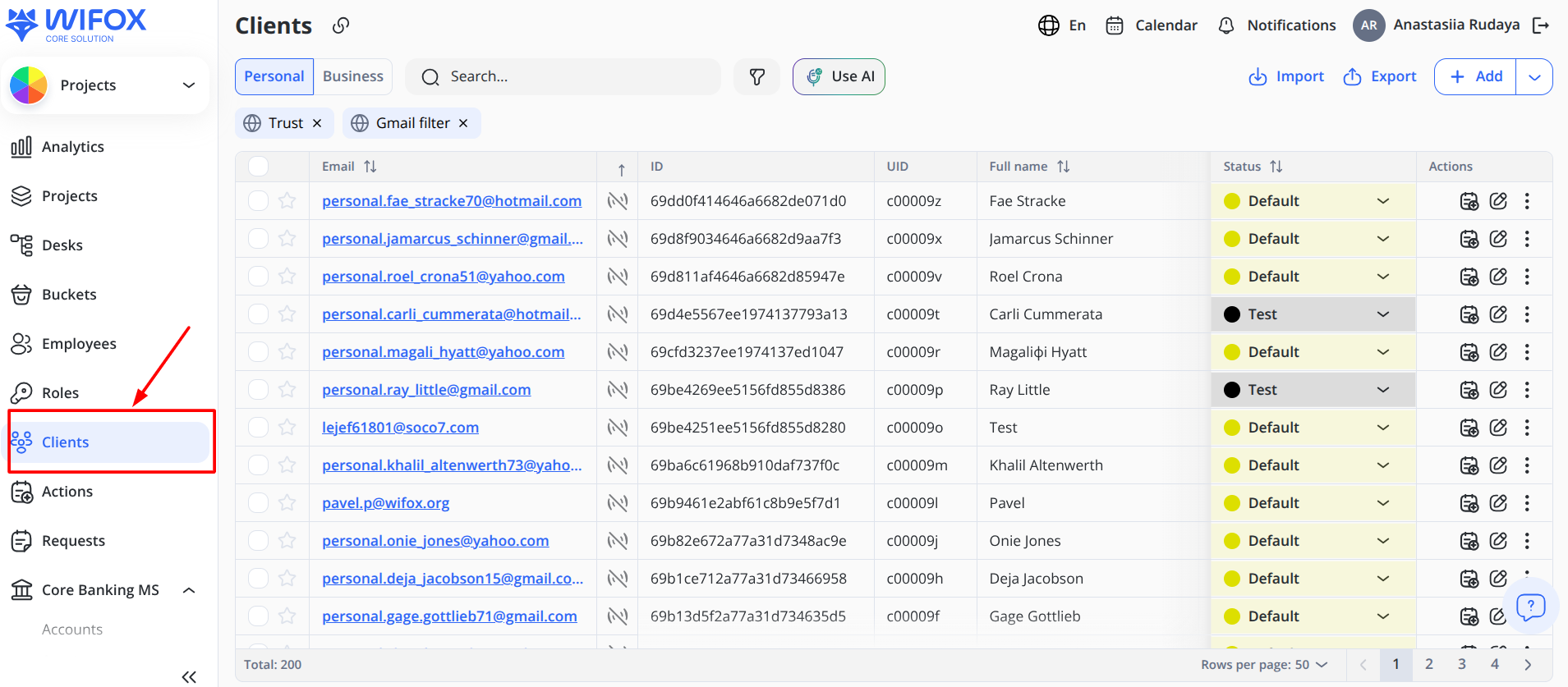
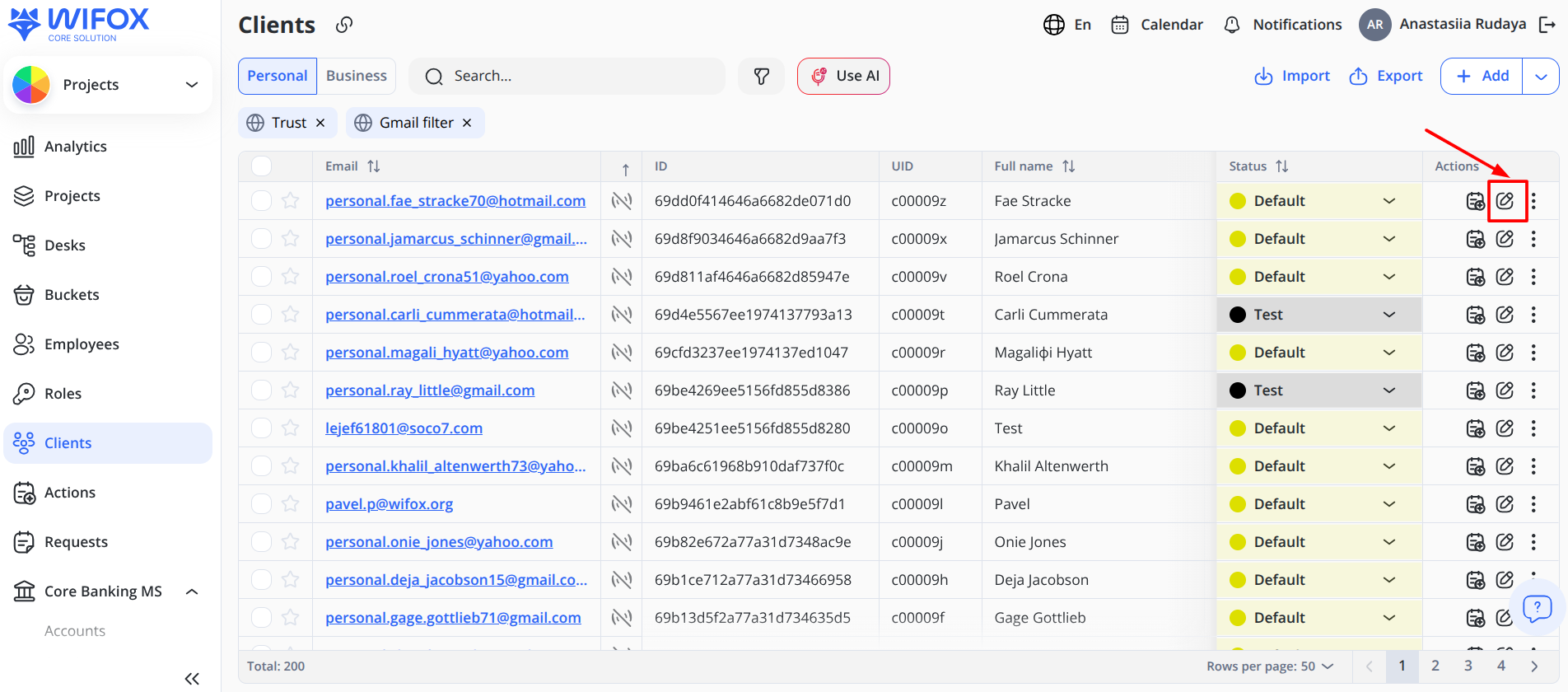
Assigning Trading Group to an Account
You assign Trading Groups from the Clients module.
Steps:
Each trading account:
Must have exactly one primary Trading Group.
Cannot trade without one.
Multiple group ordering logic is no longer used for leverage.
Changing Trading Group on an AccountIf the account has open positions, a modal appears:
Recalculate margin for current open positions?Yes / No
If "Yes" Selected
All open positions are recalculated using new effective leverage.
Margin requirement updates immediately.
Liquidation levels adjust accordingly.
If "No" Selected
Existing positions keep original leverage and margin.
New orders use the new Trading Group leverage.
Stored leverage on positions remains unchanged.
Position Leverage Storage
At order execution:
Effective leverage is calculated.
That leverage is stored on the Position.
It becomes immutable.
Stored leverage is used for:
Margin maintenance
Liquidation checks
Risk monitoring
PnL exposure logic
If Trading Group changes later and "No recalculation" was selected:Existing positions continue using stored leverage.Margin Calculation
Margin = PositionContract ValueSize × Volume × Price / Stored Leverage
Editing & Deleting Groups
Open the form → Modify values → Save.
Deleting a group:
Trading → Configurations remains baseline for:
Glossary
Container defining leverage and trading parameter overrides for accounts.clients.
Base leverage defined at group level.
Optional leverage rule for instrument family.
Leverage resolved at order execution.
Immutable leverage saved on a Position at creation time.