
2. Integrations
The CI/CD (Continuous Integration / Continuous Deployment Management System) is designed to streamline the process of integrating, deploying, and managing automated pipelines.
Use Cases
-
Accessing Integrations
Navigate to CI/CD → Integrations from the left-hand menu to view a list of configured integrations (e.g., Jenkins). -
Adding or Editing an Integration
Click + Add to create a new integration or select the Edit (pencil) icon to modify an existing one. Enter the name/label, URLs, and credentials (API tokens, usernames, secret keys), then click Save to apply changes. -
Why Integrations Matter
The system uses valid credentials to authenticate with your CI/CD tool (e.g., Jenkins), enabling automated pipeline triggers and monitoring. Incorrect credentials or URLs will prevent successful integration.
Important: Alert: Integrations with unsupported CI/CD tools will not work. Ensure that only pre-approved and compatible systems are configured.
1. Accessing Integrations
In the left‐hand menu, expand CI CI/CD and click Integrations.Integrations.
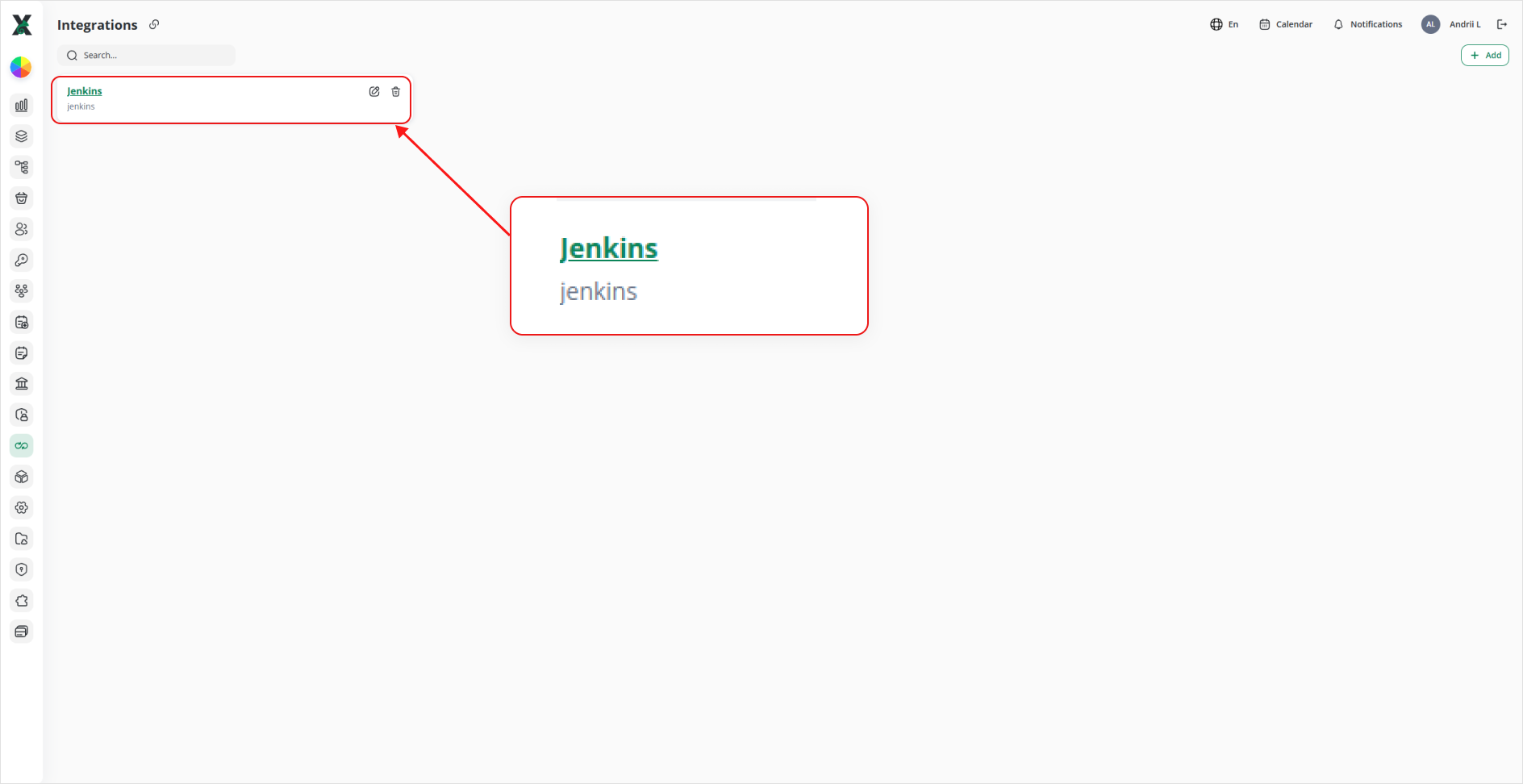

A list of configured integrations appears (e.g., “Jenkins”).
2. Adding or Editing an Integration
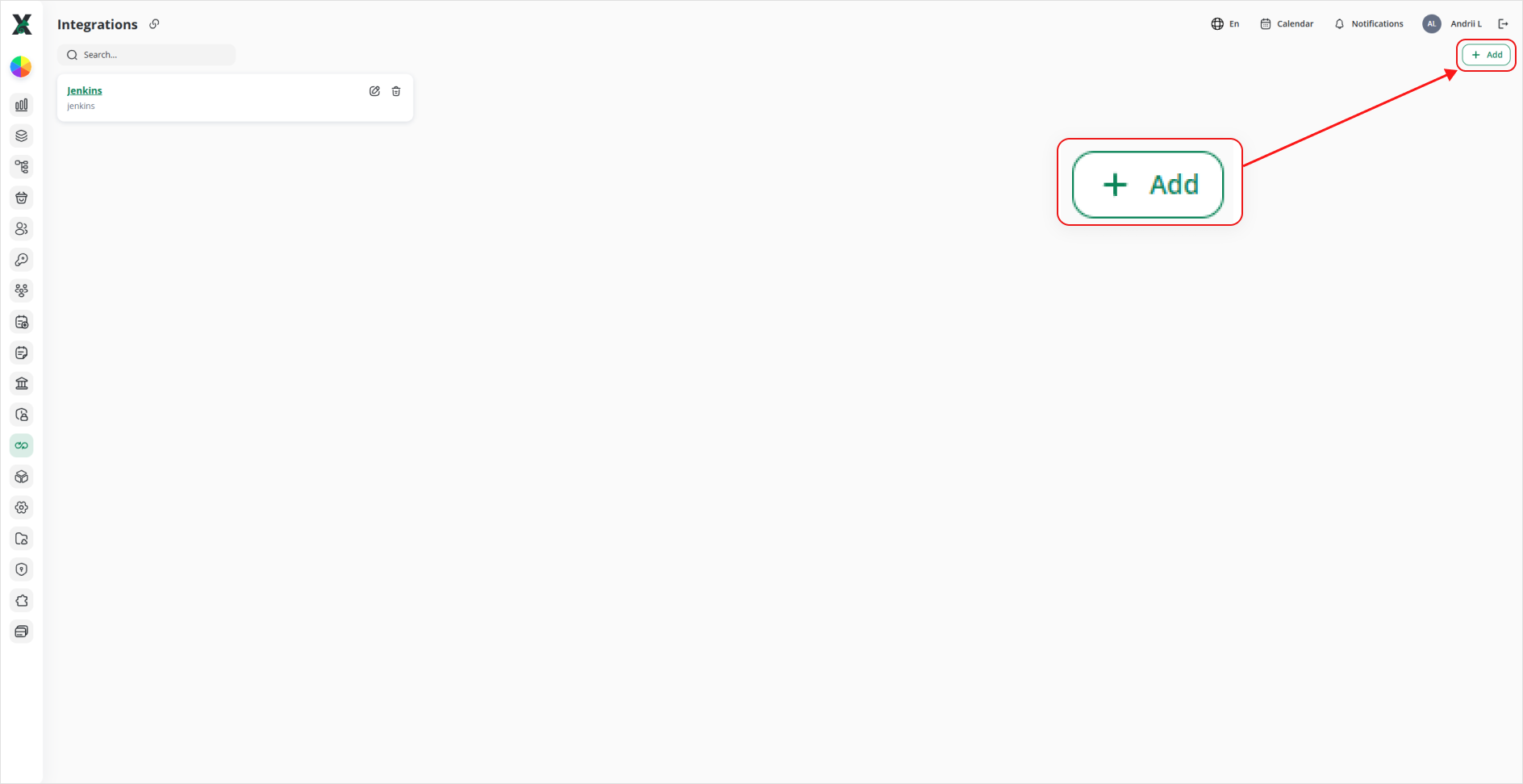
Click + Add (if visible) to create a new integration, or click the Edit (pencil) icon on an existing one.
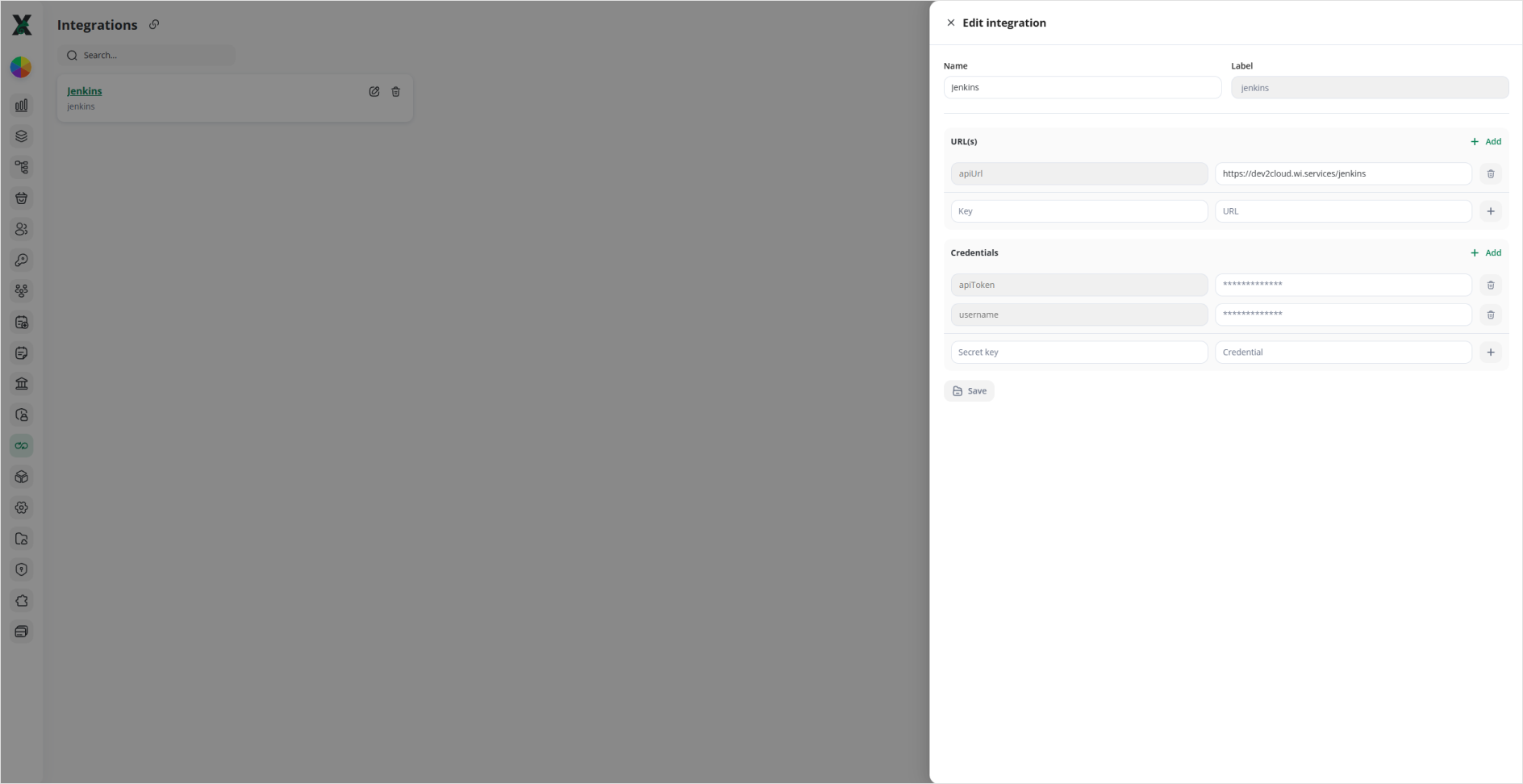

: Provide a friendly name for the integration (e.g., “Jenkins”).
Click Save to store your changes.
3. Why Integrations Matter
The system can authenticate with your CI/CD tool (e.g., Jenkins) and trigger or monitor pipelines/jobs by entering valid credentials.
Invalid credentials or URLs will prevent successful integration.
Key Points to Remember
- Only pre-approved integrations work – attempting to connect unsupported systems will result in errors.
- Correct credentials are required for successful integration.
- Deployment pipelines appear automatically after integration with a CI/CD tool.
- New integrations can be added based on business needs, but require prior discussion and approval.