
1. CI/CD Core Overview
Continuous Integration (CI) and Continuous Deployment (CD) are practices that help you quickly and reliably deliver software updates to customers. CI/CD MS module provides an interface to connect with external tools (e.g., Jenkins) for automating builds, tests, and deployments.
Use Cases
-
Set Up a Jenkins Integration
Navigate to CI/CD → Integrations → + Add, enter “Jenkins” as the name, add the Jenkins server URL, and provide credentials (API token, username, secret key). -
Check Pipelines
Click Pipelines, select Jenkins, and view existing Jenkins jobs or runs for better tracking. -
Monitor Builds
As Jenkins triggers automated builds/tests, the system continuously updates and displays the run statuses for real-time monitoring.
Integrations
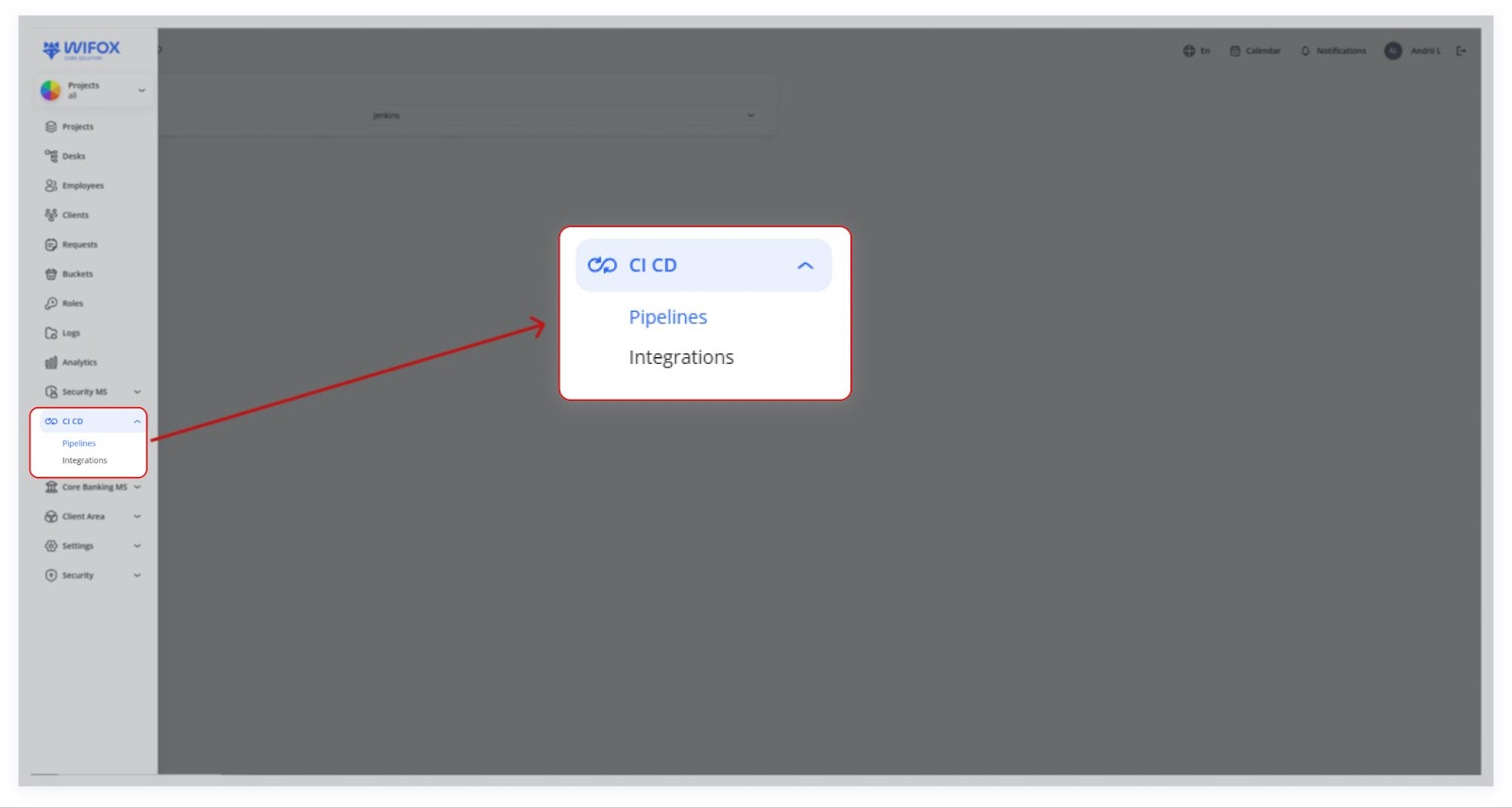
1.actions Accessingare Integrations
Inin the left‐hand menu, expand CI CD and click Integrations.

A list of configured integrations appears (e.g., “Jenkins”).
2. Adding or Editing an Integration
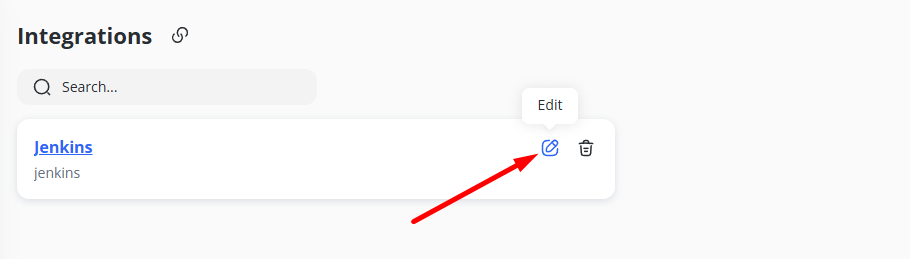
Click + Add (if visible) to create a new integration, or click the Edit (pencil) icon on an existing one.

Name / Label: Provide a friendly name for the integration (e.g., “Jenkins”).
URLs: Add one or more URLs and corresponding keys (e.g., apiUrl: https://...).
Credentials: Input tokens, usernames, secret keys, or other authentication data required by your CI/CD tool.Core module:
- Integrations
ClickPipelines
3. Why Integrations Matter
The system can authenticate with your CI/CD tool (e.g., Jenkins) and trigger or monitor pipelines/jobs by entering valid credentials.
Invalid credentials or URLs will prevent successful integration.
In short, the CI/CD MS module links your CRM system with external DevOps pipelines. By setting up an integration (e.g., Jenkins), you can authenticate and manage your continuous integration/deployment processes directly from within the system. If your organization uses other CI/CD platforms, our system can integrate with those—just provide the required credentials and endpoints.